Description
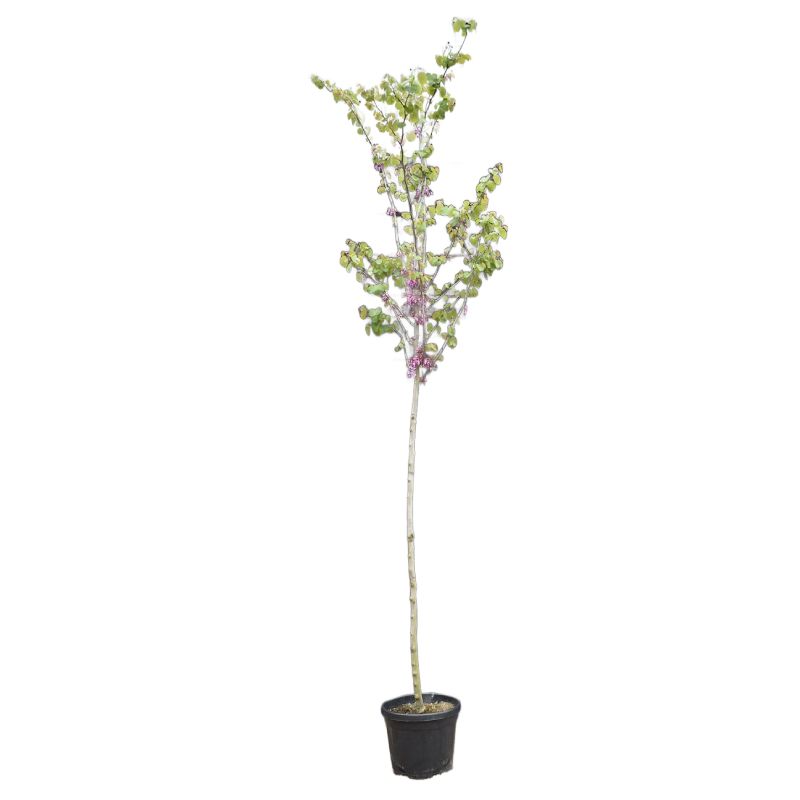
The Cercis siliquastrum, universally known as the Judas Tree (or Is-Siġra ta’ Ġuda in Maltese), is one of the most iconic and breathtaking sights of a Mediterranean spring. Before its leaves even emerge, the bare woody branches and trunk literally erupt in a dense, dramatic blanket of pea-like, bright pink-to-magenta flowers.
💧 Watering
While young or newly planted trees need regular watering to establish their root systems, mature Judas Trees are incredibly drought-tolerant. Water thoroughly when the top few centimeters of soil are dry. During a hot Maltese summer, a deep watering once a week is usually plenty for established specimens. Be sure the soil dries out between waterings, as they cannot tolerate soggy, waterlogged roots.
☀️ Light
It absolutely thrives in full sun to partial shade. To get the absolute maximum flower coverage in spring, plant it in a spot that receives at least 6 hours of direct sunlight daily. It handles the intense, reflective heat of Malta’s limestone walls and hot summer pavement with ease.
🍃 Foliage / Growth
Features stunning, distinct heart-shaped (or kidney-shaped) leaves that emerge a soft bronze-green in spring, turning a rich bluish-green in summer, and shifting to a lovely yellow in autumn before dropping for winter. It is a slow-to-moderate grower that naturally forms a small, rounded tree or large shrub (typically reaching 4–8 meters over many years), making it ideal for smaller Maltese town gardens.
🪴 Potting Mix
The Judas Tree is perfectly adapted to Malta because it actively thrives in alkaline, limestone-rich soils. It can grow in poor, sandy, or stony ground, but it demands excellent drainage. If a customer wants to keep a young specimen in a large pot on a terrace, advise them to use a deep container filled with a loam-based compost mixed with plenty of coarse sand or grit.
🌿 Fertilizer
As a member of the Fabaceae (pea) family, it has a superpower: it is a nitrogen-fixing plant, meaning it works with soil bacteria to create its own fertilizer from the air! Consequently, it needs very little feeding. A light top-dressing of organic compost or a slow-release balanced fertilizer in early spring is more than enough.
🐕🐈 Pet Safety**
Cercis siliquastrum is generally considered non-toxic to dogs and cats. In fact, the flowers are technically edible for humans too (often used to add a sweet, tangy crunch to salads!). It is a completely safe tree to plant in a pet-friendly family garden.
🌬️ Air Purifying
As a robust garden tree, its environmental impact is massive. Its dense summer canopy provides excellent shade to cool down concrete patios, it acts as a great windbreak, and its early spring flowers provide an absolutely vital, massive food source for local bees and pollinators waking up from winter.
*Pictures shown may vary from actual product due to the live nature of the items. Some items may be out of stock for various reasons, we will issue a refund or offer alternatives should that be the case.
The Price is per one individual plant.
**This plant is labeled as non-toxic to cats and dogs by the ASPCA. However, be advised that the consumption of any plant material may cause vomiting and gastrointestinal upset for dogs and cats. Sherries will not be held accountable to any symptom. If you believe that your animal is ill or may have ingested a poisonous substance, please contact a vet immediately.