Description
💧 Watering
Keep the potting mix consistently lightly moist, allowing only the top 1–2cm to dry before watering again. During Malta’s hot summers, check the soil frequently, but never leave the roots sitting in water. Calatheas can be sensitive to hard tap water, so filtered or rainwater is preferable when available.
☀️ Light
Grows best in bright, indirect light and can also tolerate medium light conditions. Keep it away from direct sunlight, particularly Malta’s intense summer sun, which can scorch the leaves and fade their attractive patterns.
🍃 Foliage / Growth
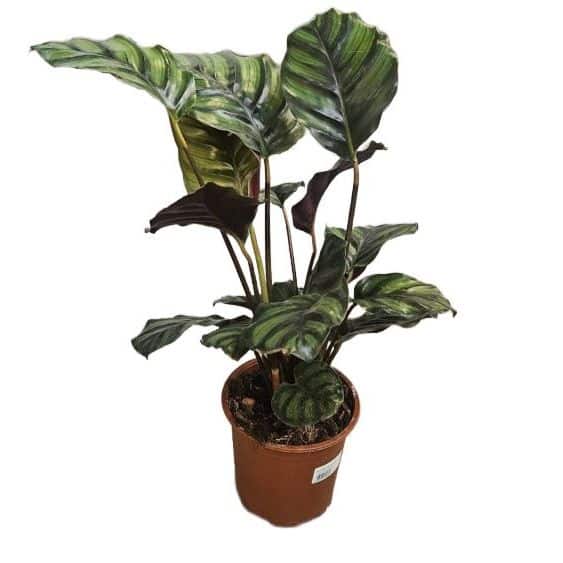
This compact, clump-forming plant produces broad, rounded leaves with striking striped patterns. Like other members of the prayer plant family, its leaves may gently change position between day and night. Brown leaf edges can indicate low humidity, inconsistent watering, or mineral-rich water.
🪴 Potting Mix
Use a light, moisture-retentive but well-draining potting mix rich in organic matter. A mixture containing quality indoor plant compost, perlite, and orchid bark provides a good balance of moisture retention and airflow around the roots.
🌿 Fertilizer
Feed every 4–6 weeks during spring and summer with a balanced liquid houseplant fertilizer diluted to half strength. Reduce or stop feeding during autumn and winter when growth naturally slows.
🐕🐈 Pet Safety***
Calathea fasciata is considered non-toxic to cats and dogs, making it an excellent choice for pet-friendly homes.
🌬️ Air Purifying
Calathea fasciata’s broad, lush foliage contributes to a fresher indoor environment through normal plant processes such as photosynthesis and transpiration. It is primarily valued for its decorative foliage rather than as a proven substitute for ventilation or indoor air filtration.
*Pictures shown may vary from actual product due to the live nature of the items. Some items may be out of stock for various reasons, we will issue a refund or offer alternatives should that be the case.
The Price is per one individual plant.
**This plant is labeled as non-toxic to cats and dogs by the ASPCA. However, be advised that the consumption of any plant material may cause vomiting and gastrointestinal upset for dogs and cats. Sherries will not be held accountable to any symptom. If you believe that your animal is ill or may have ingested a poisonous substance, please contact a vet immediately.