Regular grooming does much more than keep your dog looking their best. Brushing removes loose hair and dirt, helps prevent uncomfortable tangles and gives you an opportunity to check your pet’s skin and coat.
With several types of brushes and combs available, however, choosing the right one can be confusing. Here’s a simple guide to the Beeztees grooming tools available from Sherries Estates and what each is designed to do.
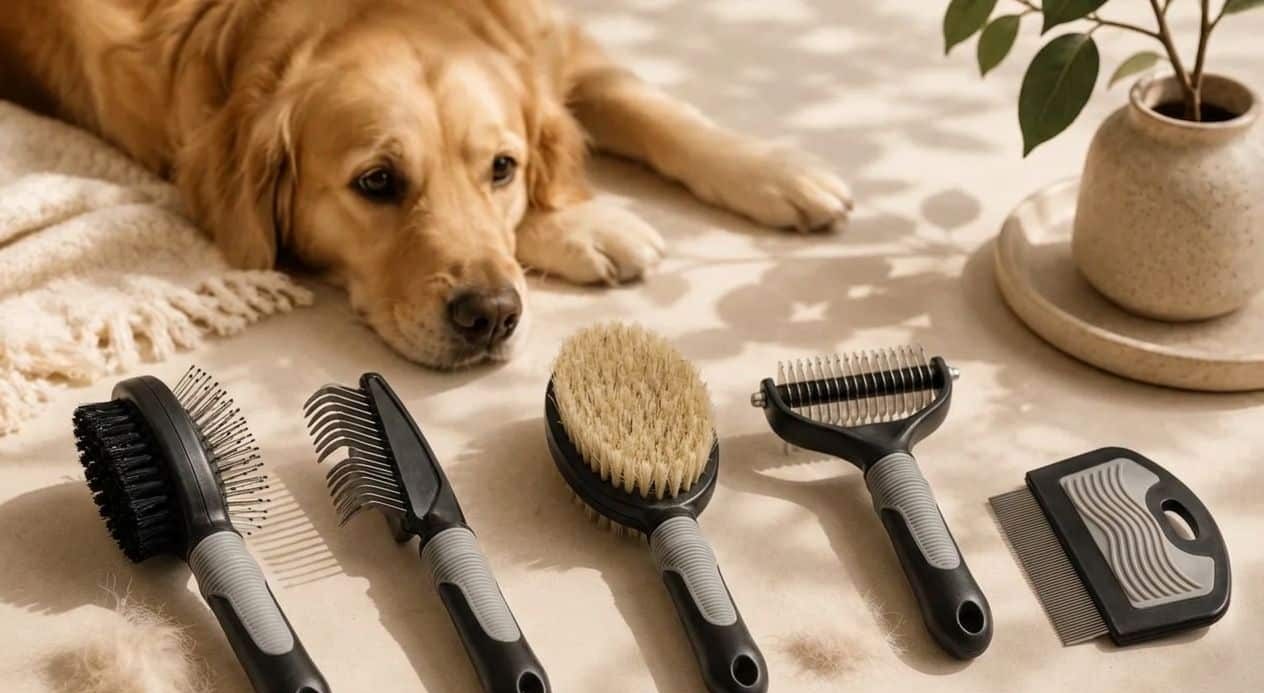
Grooming brushes for everyday coat care
A traditional grooming brush is ideal for removing surface dirt and loose hair. It is a good choice for regular maintenance and can also help puppies become comfortable with being handled and brushed.
The Beeztees Small Grooming Brush is particularly suitable for puppies and smaller dogs. Use gentle strokes in the direction of hair growth, keeping early grooming sessions short and positive.
-

Beeztees Grooming Brush Cat Black Grey 21cm
The Beeztees Grooming Brush can be used to keep your cat's coat nice and soft. W...
€9.29 -
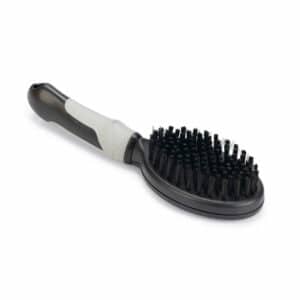
Beeztees Grooming Brush Dog Black Grey 23
The Beeztees Profur Grooming Brush removes dirt and loose hair on the surface of...
€10.99 -
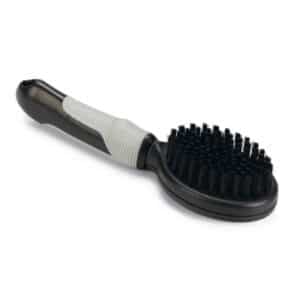
Beeztees Grooming Brush Small Dog Black Grey 20.5cm
Measurement: 20.5x6x3.5 cm
€8.99 -

Beeztees Puppy Brush Black Grey 23
The Beeztees Puppy Brush removes dirt and loose hair on the surface of your pupp...
€11.29
Combination brushes: two tools in one
A combination brush is a practical all-rounder. One side normally features pins that loosen the coat and remove dead hair, while the softer side smooths the surface and provides a gentle finishing brush.
The Beeztees Combi Brush offers both functions in a single tool. It is useful for routine grooming and for pets that enjoy a softer brush after loose hair has been removed.
For larger dogs or a broader brushing surface, consider the Beeztees Combi Brush Large.
-

Beeztees Combi Brush Cat Black Grey 21cm
Do you want to really spoil your cat and ensure that his or her coat stays in an...
€12.20 -

Beeztees Combi Brush Dog Black Grey 21
This brush has a double function. One side has pins to remove loose and dead hai...
€12.79 -
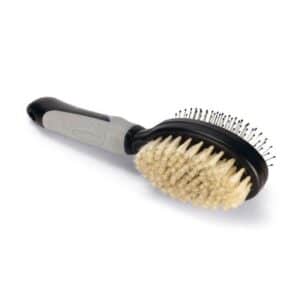
Beeztees Combi Brush L Dog Black Grey 22.5
The Beeztees Combi Brush has dual function. The side with pins loosens the coat ...
€14.99
Slicker brushes for medium and long coats
Slicker brushes have fine pins designed to work through the coat and undercoat. They are particularly useful for medium and long haired dogs because they help remove loose hair, dirt and smaller tangles before these develop into mats.
The two-sided Beeztees Flexible Slicker Brush can be used on both sides and is designed to maintain the coat and undercoat.
Work through the coat in small sections and use light pressure. Pay particular attention to areas where tangles often develop, including behind the ears, under the legs and around the tail.
-
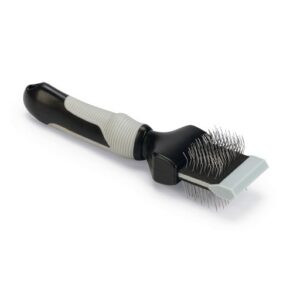
Beeztees Flex Slicker Brush 2-Sided Small Dog 20cm
Measurements: - Total brush: 20x4.5x4 cm - Brush section: 4.8x4.2 cm
€11.99 -
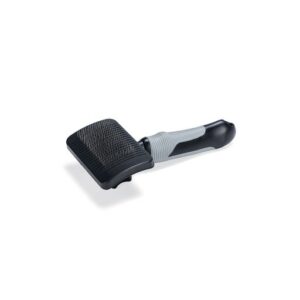
Beeztees Self Cleaning Slicker Brush Dog Black
Available in 2 sizes
Price range: €12.95 through €16.79 -
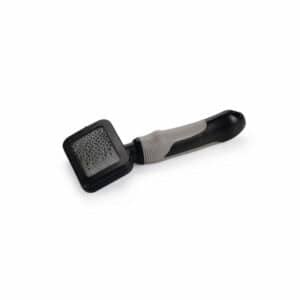
Beeztees Slicker Brush Cat S Black Grey 17.5cm
Of course you want the fur of your cat to be nice and soft, without dirt and dea...
€8.20 -
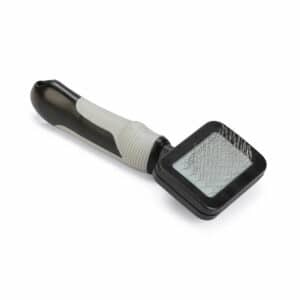
Beeztees Slicker Brush Dog Black Grey
Available in 3 sizes
Price range: €9.89 through €12.29 -
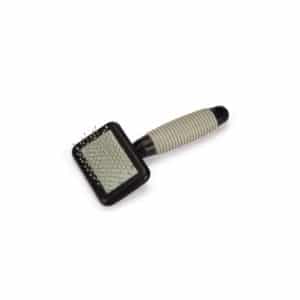
Beeztees Slickerbrush For Rodents 12cm
You will revitalize your pet rodent’s nice shiny coat with this Beeztees Slick...
€6.99
Rotating-pin combs for tangles and loose hair
A grooming comb helps loosen the coat and remove dirt, shed hair and tangles. Rotating pins move more easily through the fur, reducing pulling and making grooming more comfortable.
The Beeztees Fine Grooming Comb with Rotating Pins is suited to finer coats and detailed grooming. For thicker or coarser coats, the Beeztees Coarse Grooming Comb with Rotating Pins provides wider spacing between the teeth.
A comb can also be used after brushing: if it passes smoothly through the coat, you are less likely to have missed a hidden tangle.
-
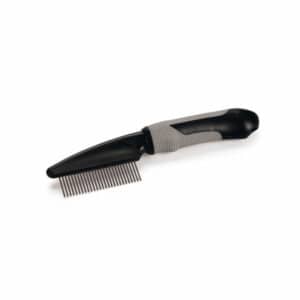
Beeztees Grooming Comb Cat M Black Grey 21cm
Of course you want as few tangles and as little dirt as possible in your cat's c...
€6.99 -
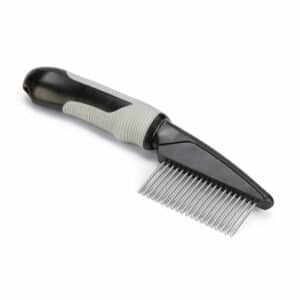
Beeztees Grooming Comb Rota Pins Coarse Dog 21
The Beeztees Grooming comb is ideal for loosening your dog's coat, which will re...
€7.69 -
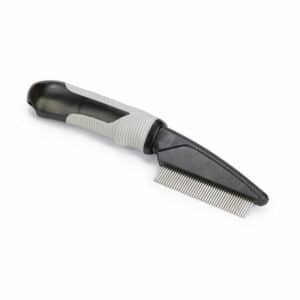
Beeztees Grooming Comb Rotat Pins Fine Dog 21
The Beeztees Grooming comb is ideal for loosening your dog's coat, which will re...
€8.99
Curry combs for thick undercoats and moulting
Dogs with dense double coats can shed large quantities of undercoat, especially during seasonal changes. A curry comb reaches into this thicker layer to remove loose hair more effectively.
The Beeztees Double-Row Curry Comb features two rows of specially shaped rotating pins and is designed for dogs with thick undercoats, particularly during moulting periods.
The Beeztees Profur Single-Row Curry Comb is another option for maintaining a thick undercoat. Its rotating teeth help the comb move through the coat more easily.
Always comb in the direction of hair growth and avoid repeatedly working over the same patch of skin.
-

Beeztees Curry Comb Double Row Rot Pins Dog 16.5cm
Measurement: 16.5x10.5x3 cm
€15.60 -
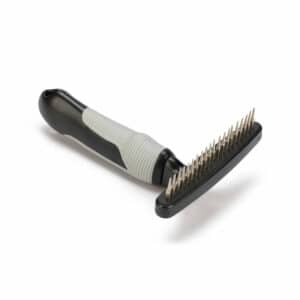
Beeztees Curry Comb Single Rot Pins Dog 15.5
The Beeztees Curry Comb has a single row of pins and is ideal for dogs with a th...
€12.30 -
Beeztees Profur Curry Comb Double Wide Model 15
The Beeztees Profur Curry Comb, Double is great for keeping your dog's coat in o...
€12.49 -
Beeztees Profur Curry Comb Single Rotate Pin 15
The Beeztees Profur Curry Comb, Single is great for keeping your dog's coat in o...
€11.29 -
Beeztees Profur Curry Comb Single Small Rotating Pins 14cm
€9.59
De-matting combs for stubborn tangles
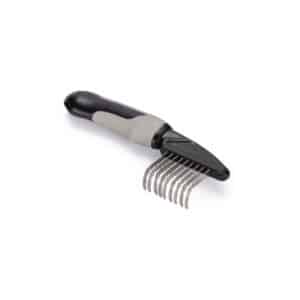
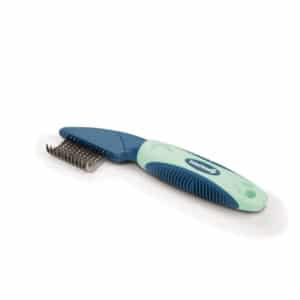
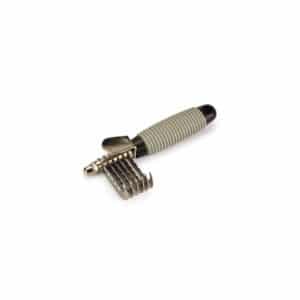
A normal brush or comb may not be enough when a long coat develops tightly knotted areas. De-matting combs feature blades that gently cut through mats while preserving as much coat length as possible.
The Beeztees Coarse De-matting Comb is intended for long-haired coats. Start near the paws and gradually work upwards, handling each tangle gently rather than pulling.
Because the comb has sharp edges, keep them directed away from your dog’s skin. Severe mats, particularly those close to the skin, are best handled by a professional groomer.
Flea combs for checking the coat
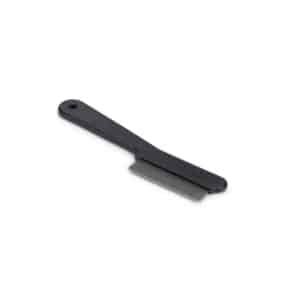
A flea comb has closely spaced teeth that can catch fleas and flea dirt. It can be used to inspect the coat as well as to remove visible fleas.
The Beeztees Flea Comb with Rotating Pins is suitable for coats ranging from short to long. Comb in the direction of hair growth and check the contents after each pass.
A flea comb is a useful detection tool, but it does not replace an appropriate flea-prevention or treatment programme. Speak to your veterinarian if you notice signs of an infestation.
-
Beeztees Dog Flea Comb 14cm
With the Beeztees Flea Comb, you can comb fleas out of your dog’s coat. Yo...
€5.30 -
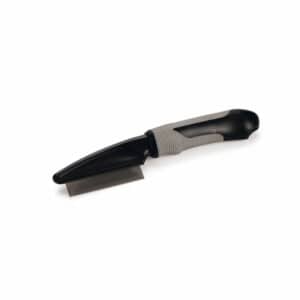
Beeztees Flea Comb Cat Big Black Grey 21cm
Fleas are certainly not nice! That is why the we developed the Beeztees Flea Com...
€7.99 -
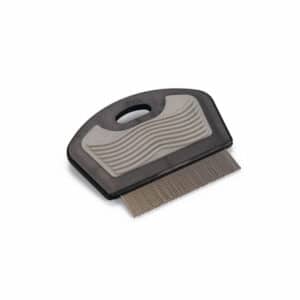
Beeztees Flea Comb Cat Small Black Grey 7cm
Fleas are certainly not nice! That is why the we developed the Beeztees Flea Com...
€4.99 -

Beeztees Flea Comb Rotating Pins Dog Black & Grey
– For short to long haired coats – Equipped with a soft grip Dimensions:...
€7.90
Which grooming tool should you choose?
As a quick guide:
- For puppies and surface grooming: choose a gentle grooming brush.
- For versatile everyday care: use a combination brush.
- For medium or long coats: try a slicker brush.
- For fine or coarse tangles: choose the corresponding rotating-pin comb.
- For thick undercoats and seasonal shedding: use a curry comb.
- For stubborn mats: carefully use a de-matting comb.
- For checking for fleas: keep a fine flea comb handy.
Many dogs benefit from more than one tool. For example, a slicker brush to remove loose undercoat followed by a comb to check for remaining tangles.
Whichever brush you choose, introduce it gradually and make grooming a calm, rewarding experience. Explore the Beeztees grooming range at Sherries Estates and find the right tools for your pet’s coat.