Description
💧 Watering
This plant loves moisture but hates “wet feet.” Water when the top 3–5 cm of soil feels dry. During a scorching Maltese summer, it may need water every few days, but in the humid winter, be extremely careful—overwatering in cold weather is the fastest way to cause tuber rot.
☀️ Light
Prefers bright, indirect light. While it can handle some direct morning sun, the intense Maltese afternoon sun will quickly bleach and tarnish the lush green leaves. If kept indoors, place it near a large, bright window.
🍃 Foliage / Growth
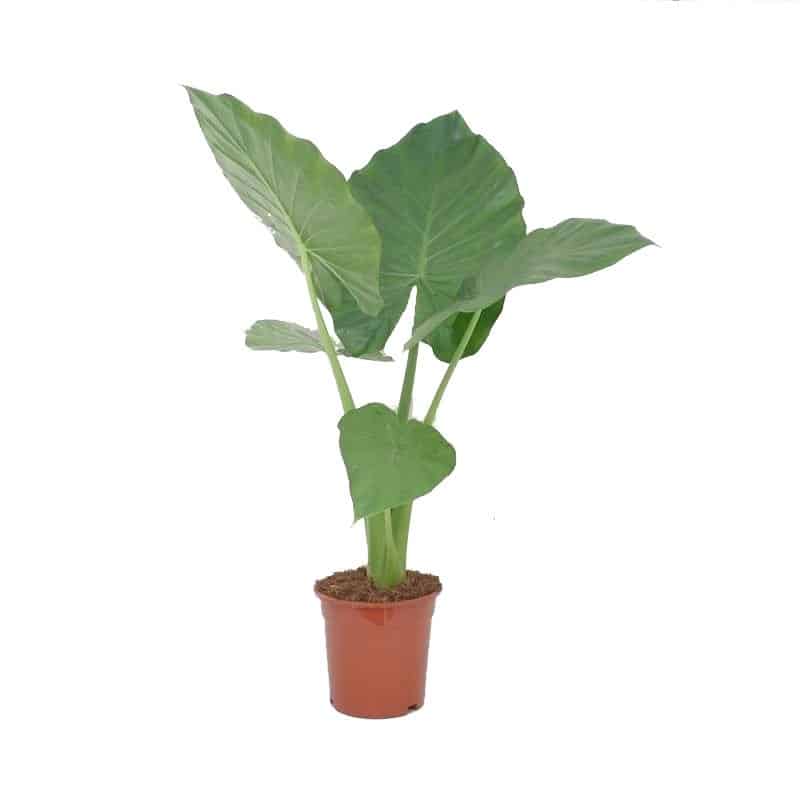
Features enormous, upright, lime-to-forest green leaves that can grow over a meter long. It is a fast grower under the right conditions and will naturally shed older, lower leaves as new, larger ones emerge from the center.
🪴 Potting Mix
Needs a “chunky,” well-draining mix. A blend of potting soil, orchid bark, and perlite works best. This mimics its natural tropical floor habitat and prevents the soil from becoming a heavy, compacted mass during Malta’s humid spells.
🌿 Fertilizer
A heavy feeder during the growing season! Apply a balanced liquid fertilizer every 2 weeks from March to September. Because it grows so large, it needs plenty of fuel to maintain those massive leaves.
❌🐕🐈 Pet Safety
Highly toxic to cats and dogs. Like the Dieffenbachia, it contains calcium oxalate crystals that cause immediate oral irritation, swelling, and drooling. Given its size, it is usually a floor plant, so keep it in a room away from curious chewers.
🌬️ Air Purifying
Due to its massive leaf surface area, it is an incredible oxygen producer and a natural humidifier. It is very effective at transpiring moisture back into the air, which can help during the dry, air-conditioned months of summer.
*Pictures shown may vary from actual product due to the live nature of the items. Some items may be out of stock for various reasons, we will issue a refund or offer alternatives should that be the case.
The Price is per one individual plant.